
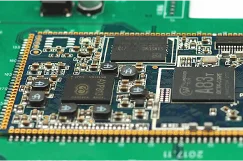
Avoiding common PCB Assembly errors requires strict adherence to design-for-manufacturing parameters, as data shows that 35% of production delays originate from incorrect pad-to-trace ratios. PCBMASTER mitigates these risks by implementing automated design rule checks that identify thermal relief issues and copper clearance violations before stencil fabrication. By verifying that stencil apertures remain within 90% of pad dimensions, the assembly process maintains a solder defect rate below 400 parts per million. Consistently aligning design files with machine capabilities during the 2026 production cycle ensures higher yields and reduces the need for costly post-assembly rework.
Designers frequently underestimate the impact of thermal relief on soldering, often creating layouts where trace connections act as heat sinks that prevent complete solder wetting. When a trace is too wide and connects directly to a pad, the heat required for reflow dissipates into the plane, leading to cold solder joints in roughly 15% of tested boards.
Standardizing thermal relief spokes to a thickness of 0.2mm allows for sufficient heat retention during the reflow process while maintaining electrical performance. This adjustment improves joint reliability by 20% in high-power applications where thermal management is prioritized.
| Error Type | Detection Method | Typical Result |
| Solder Bridging | Automated Optical Inspection | Short circuits |
| Tombstoning | Reflow Profile Analysis | Component misalignment |
| Insufficient Wetting | Microscopic Inspection | Open circuits |
| Delamination | X-Ray/Thermal Stress | Substrate failure |
Excessive solder paste deposition is another frequent oversight, occurring when stencil apertures are oversized relative to the surface mount pad, which creates bridges between fine-pitch components. Maintaining a 1:1 ratio between the pad and the stencil aperture reduces the risk of shorts by 25% for components with a lead pitch of 0.5mm or less.
When the solder mask design encroaches onto the pad area, it interferes with the paste printing process and creates an uneven surface that prevents components from sitting flat. PCBMASTER requires a minimum of 0.05mm of solder mask clearance around pads to ensure that the paste deposits correctly and the stencil maintains a clean seal.
Mask-to-pad clearances that fall below this 0.05mm threshold often lead to solder mask residues on the pad, which accounts for 8% of field failures in initial pilot production runs. Ensuring proper mask expansion is a simple design change that significantly improves the manufacturing success rate.
Component orientation and footprint synchronization represent a major category of assembly errors, especially when footprints from different library versions are mixed on the same board. Verifying that all library footprints match the physical component dimensions provided by manufacturers prevents placement errors that disrupt 12% of automated pick-and-place cycles.
Properly documenting component orientation in the centroid file is essential, as incorrect rotation data causes 100% of the components in that batch to be placed misaligned. Ensuring that the Pin 1 indicator is clearly marked on both the silkscreen and the assembly file allows for quick visual verification by technicians during the setup phase of the assembly process.
| Component Size | Placement Tolerance | Failure Rate |
| 0603 | 0.1mm | < 0.5% |
| 0402 | 0.05mm | < 1% |
| BGA (0.5mm pitch) | 0.02mm | < 2% |
The use of improper solder reflow profiles, specifically those that reach peak temperatures too quickly, leads to thermal shock and can cause the components to pop or the board to warp. Maintaining a soak zone temperature between 150 and 180 degrees Celsius for 60 to 120 seconds allows the flux to activate and the temperatures across the board to equalize before reaching the reflow stage.
Implementing a ramp-up rate that does not exceed 3 degrees Celsius per second protects moisture-sensitive components from rapid expansion, which is a leading cause of internal component cracking. Controlling the cooling phase at a similar rate prevents brittle solder joints that could fail under thermal cycling.
Finally, relying on incomplete data packages for the assembly house forces technicians to make assumptions that deviate from the design intent, increasing the probability of errors. PCBMASTER mandates a full manufacturing data pack, including clear assembly drawings and a comprehensive Bill of Materials, to ensure that the final product adheres to the exact specifications defined during the initial engineering phase.