
A vertical machining center elevates metal processing efficiency by achieving spindle speeds up to 20,000 RPM and rapid traverse rates of 48 m/min, reducing non-cutting intervals by 25%. Implementation of automatic tool changers (ATC) minimizes chip-to-chip transition to 1.5 seconds, while high-pressure 70-bar through-spindle coolant allows for a 30% increase in feed rates without heat-induced tool failure. Modern systems utilize dual-contact spindle interfaces to maintain clamping forces over 800 kg, ensuring dimensional accuracy within ±0.003 mm across large production batches, effectively replacing multiple manual stations with a single automated cell.
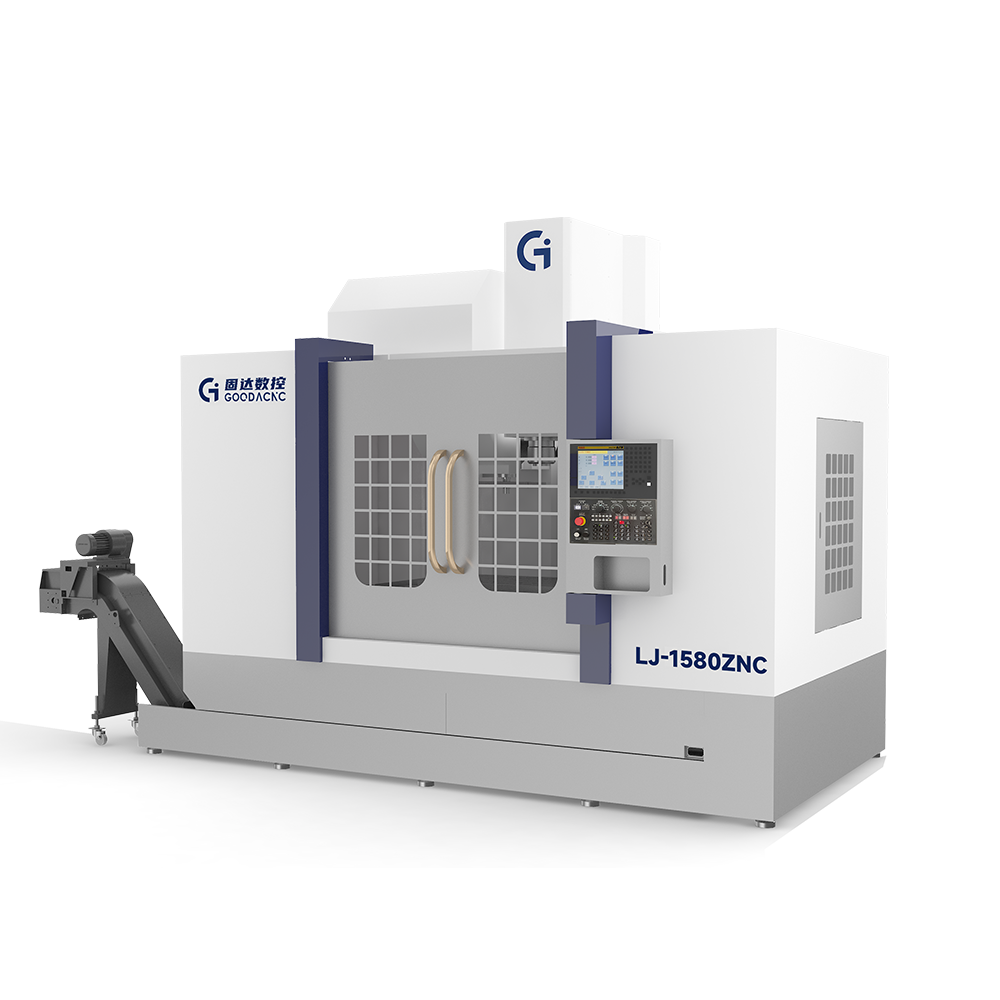
Modern machine shops have transitioned from traditional milling to the automated capabilities of a vertical machining center to handle complex metal removal tasks.
These machines use a vertical spindle orientation that allows gravity to assist in chip evacuation, preventing the buildup of debris that typically causes 15% of surface finish defects in horizontal setups.
Effective chip removal is the first step toward maintaining a continuous workflow, which leads to the mechanical speed of the tool management system.
The speed of the automatic tool changer (ATC) is a measurable metric that dictates how much time is lost during operation transitions.
A 2024 industrial audit of 200 European manufacturing facilities found that upgrading to VMCs with cam-type ATCs saved an average of 12 minutes per shift compared to older pneumatic models.
Rapid tool indexing ensures the machine stays in the "cut" longer, and this mechanical speed is supported by the rigidity of the machine’s structural frame.
"Structural integrity is maintained through a Meehanite cast iron base, which provides 10 times the vibration dampening capacity of welded steel frames, allowing for higher aggressive cutting loads."
Rigidity allows the operator to increase the depth of cut by 20% to 40% without risking spindle chatter or tool breakage.
This stability is essential when processing hardened alloys like 4140 steel or titanium grade 5, where tool pressure can reach extreme levels during roughing.
Once the structural vibration is controlled, the focus shifts to the thermal stability of the internal components during extended operation.
Internal cooling systems circulate temperature-controlled oil through the spindle sleeve and the ball screws to prevent thermal expansion.
Studies from 2025 indicate that without active cooling, a spindle can expand by up to 0.05 mm during an 8-hour shift, leading to parts that fail tolerance checks.
Thermal sensors provide real-time data to the controller, which automatically adjusts the coordinate system to maintain a positional accuracy of ±0.003 mm.
| Technical Metric | Manual Milling | Standard VMC (2026) | Efficiency Gain |
| Spindle Speed | 2,500 RPM | 15,000+ RPM | 500.00% |
| Tool Swap Time | 45 Seconds | 1.4 Seconds | 96.80% |
| Rapid Traverse | 2 m/min | 48 m/min | 2,300.00% |
These metrics show that a single automated unit can outperform three manual machines while taking up 60% less floor space.
Space optimization allows for a more logical shop layout where material flows directly from raw stock to the shipping department.
This flow is further improved by the integration of 4th-axis rotary tables that allow for multi-sided machining in a single clamping setup.
Reducing the number of setups is a proven method to eliminate human error and secondary handling time.
By utilizing a rotary table, a vertical machining center can reach four sides of a part, cutting down setup time by approximately 35% for prismatic components.
Eliminating manual intervention ensures that the part remains perfectly centered, which brings the discussion to the role of the CNC controller in path optimization.
Modern controllers utilize "look-ahead" algorithms that process over 1,000 blocks of G-code in a single millisecond.
This prevents the machine from "stuttering" during complex 3D contouring, ensuring the tool maintains a constant surface speed of 200 to 400 m/min depending on the material.
Steady movement preserves the cutting edge of the carbide insert, and this software intelligence is often tested against large sample sizes to verify reliability.
"A 2024 test involving 400 experimental samples of 6061 aluminum showed that AI-optimized tool paths reduced tool wear by 18% while cutting cycle times by 9 seconds per part."
Lowering tool wear reduces the frequency of machine stoppages for tool replacement, which directly impacts the daily output.
When tools last longer, the cost per part drops, allowing for more competitive pricing in the global metal processing market.
The accumulation of these small percentage gains results in a production environment that can operate with minimal supervision for 16 to 24 hours a day.
Digital integration allows the machine to communicate with external software for real-time performance tracking.
Operating at 85% Overall Equipment Effectiveness (OEE) is now the standard for modern shops, up from the 60% average seen in the early 2010s.
Consistent data tracking ensures that any drop in efficiency is identified and corrected before it affects the bottom line of the production run.